
- 作者:杜侯乙
- 来源:花木兰传奇
- 发布时间:2026-08-26
出租车司机
全力推进项目建设落地成势、提质增效_我的网站

A |
Extreme weather is increasingly a global challenge, and the key to addressing climate risks lies in earlier prediction, more precise action and smarter preparedness, with emerging technologies playing a vital role. The Global Times launches the "Climate Gambit" series, exploring how research teams are leveraging cutting-edge technologies, including artificial intelligence, high-performance computing and smart observation systems, to anticipate weather changes, enhance disaster early-warning and strengthen resilience against climate risks.
Inside a state key laboratory at Xi'an University of Technology, Northwest China's Shaanxi Province, there is a miniature but complete "water world" which simulated water channels, inland lakes and main rivers to recreate real flood scenarios and test their newly developed GPU Accelerated Surface Water Flow and Transport Model (GAST).
Known as a "super brain" for flood control, GAST can complete flood simulations involving more than 3 million computational units within 30 seconds, helping transform flood management from a reaction to emergency into active precautions since "flooding impacts can be predicted even before rainfall arrives."
At a time when extreme rainfall and summer flooding have become increasingly frequent, questions such as when the flooding will arrive, which roads may be submerged and when residents should evacuate have become increasingly important.
In an exclusive interview with the Global Times, Hou Jingming, a professor at Xi'an University of Technology and the leader of the research team, explained how the GAST model seeks to answer these questions by accurately predicting flood development and identifying vulnerable areas before disasters occur, and how the model helps authorities take preventive measures to reduce casualties and economic losses.
AI empowering 'flood drill'
The water tank system in the lab was designed to create a controllable, repeatable and observable environment to simulate complex hydrological processes, including river flooding, urban water level changes, lake regulation, drainage pump operations and coordinated flood-control measures.
By adjusting variations such as upstream water inflow, rainfall intensity, downstream water levels and drainage conditions, scientists can recreate different flood scenarios. Meanwhile, water levels, flow speeds and other data are collected in real time and displayed on a digital twin platform.
"If a rainstorm and corresponding floods are an exam, GAST is like a 'drill,'" Hou said. "It can simulate how floods develop, where water will flow, which areas may be inundated and when river levels may rise, ensuring authorities are well but not overly prepared."
To answer the public's concern about "whether my neighborhood will be flooded when heavy rain arrives," the team developed new algorithms for urban surface water flow, including improvements in terrain slope and friction calculations.
These breakthroughs have improved simulation accuracy in complex urban environments. Compared with extensive monitoring data, GAST can keep simulation errors of key hydrodynamic factors within 15 percent. This means the model can provide not only general flood trends, but also quantitative information such as water depth, flow speed and inundation areas.
Combined with AI technologies, it can identify complex relationships between rainfall, water conditions, flood depth, flow velocity and affected areas, cutting simulations from hours in traditional methods to minutes or even seconds.
The faster calculation capability means that once meteorological authorities update forecasts, the model can quickly estimate flood risks in different parts of a city.
"The earlier rainfall warnings are issued, the earlier we can identify potential flooding hotspots and high-risk areas," Hou said. "This saves valuable time for evacuation, traffic management and emergency deployment."
For smarter disaster response
Building an accurate flood prediction model also requires integrating large amounts of urban data other than weather forecasts, including urban terrain, drainage networks and infrastructure information.
For example, a model developed for Xi'an incorporates geographic data and drainage system information collected from relevant authorities and field surveys. After receiving rainfall forecasts, the system can quickly calculate possible flooding scenarios, showing when and where waterlogging may occur and highlighting vulnerable roads and areas through visual maps.
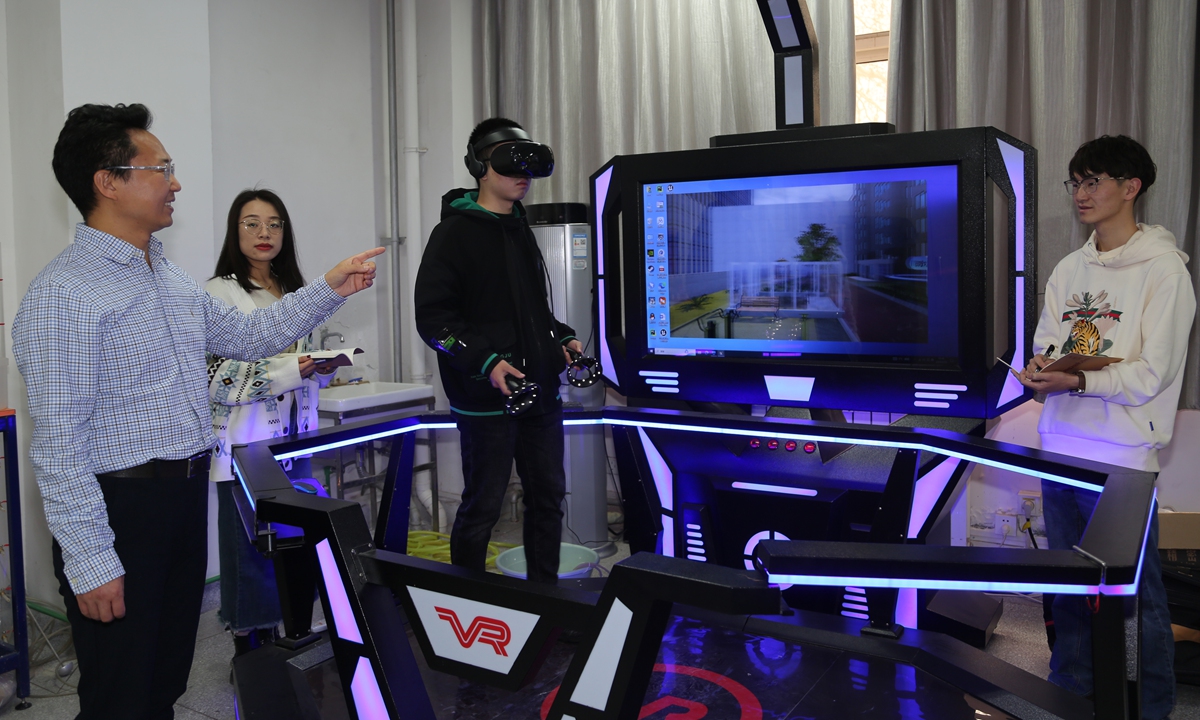
To demonstrate how the super brain works in case of possible flooding, the laboratory has set a virtual reality area where visitors can experience a simulated urban flooding evacuation in the Xiaozhai area of Xi'an. Wearing VR headsets, participants can see water levels gradually rising and follow emergency instructions to move toward higher ground.
The entire technological package has already been applied in real-world flood prevention.
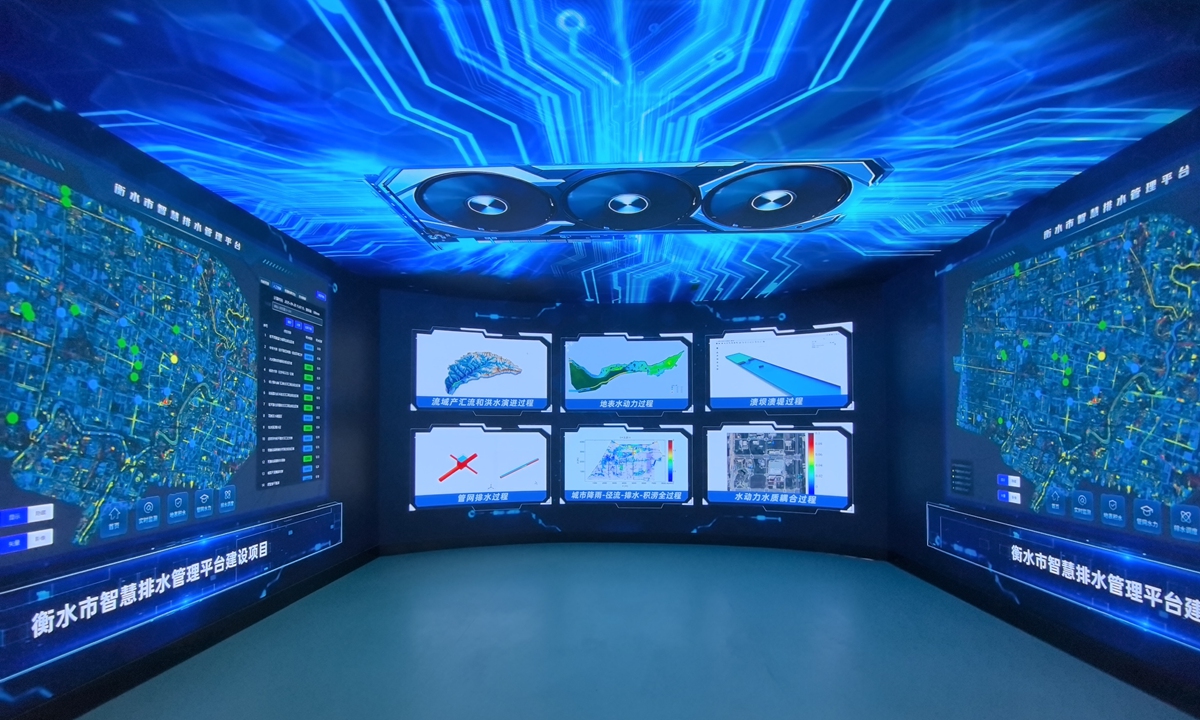
During Typhoon Muifa in 2022, Haishu district in Ningbo, East China's Zhejiang Province, recorded a regional rainfall of 367 millimeters. Using GAST as its core technology, the local flood forecasting platform integrated weather forecasts, AI algorithms and real-time monitoring data to provide rolling three-hour flood risk predictions.
Post-event assessments showed that predicted risks at most locations matched actual flooding conditions. The average relative error between predicted and observed maximum water depths was 13 percent.
The GAST model was also integrated into a smart rain and flood management platform in Qinhan new city area in Xianyang of Shaanxi, and during a rainstorm warning in July 2022, the platform provided continuous monitoring and forecasts. Based on the results, local authorities shifted from routine inspections to targeted monitoring of flood-prone areas and optimized emergency drainage operations.
The model is also being applied to mountain torrent prevention, as it can simulate rapidly changing flows in complex terrain and, combined with machine learning, complete forecasts within seconds. For reservoirs and rivers, it supports sudden and gradual dam-break simulations.
In June 2026, the model was presented at a national symposium on flood risk mapping achievements. The technology has since been applied by water resources, emergency management and urban development authorities, expanding from Shaanxi to multiple provinces and regions across China.
Looking ahead, the research team is developing a framework that further keeps up with the pace focusing on AI technologies. "Currently, the system operates based on weather forecast, therefore, AI will increase efficiency by using historical cases and real-time monitoring data to correct errors and update forecasts dynamically," Hou said.
。

B | 今年以来,全市上下持续锚定投资目标,全力以赴谋项目、拼抢争实抓开工、不遗余力促进度,全力推进项目建设落地成势、提质增效,为打好打赢攻坚之年攻坚之战提供坚实项目支撑。 1-9月份,全市开复工重点项目479个,其中,新开工项目192个,续建项目287个;9月,全市完成投资28.3亿元,同比增长55.8%,其中市域当月增长68.8%。项目建设高位推动,投资实现稳步回升。 市委、市政府主要领导高度重视项目建设工作,多次组织专题会议,全面调度推进投资项目工作,市级领导分片包点联系推进项目,各县区和部门迅速行动,采取超常规举措,全力加快项目建设。同时,强化“三位一体”项目调度推进,对重点项目实行清单台账式管理,通过“周调度、旬跟踪、月分析”,精准发力、加快推进。我市充分发挥重大项目推进专班作用,通过跨部门现场集中办公强力推进,打通堵点破解难点,不遗余力推进项目加速建设。辽宁三木苯酚丙酮产业链项目完成场平,辽宁龙岗山滑雪场项目签署正式合作协议,抚顺石化80万吨乙烯改造项目获总部批复,抚顺新钢铁高炉低碳智能化升级改造项目完成立项等前期手续,清原抽蓄二期项目完成预可研编制,国道黑大线清原城区段和新宾城区段改建工程完成可研报告。 市委、市政府主要领导亲自带队,多次赴国家电网、中石油等央企会商对接,强力推进合作,目前推动4个项目签订战略合作协议,7个项目列入省与中央企业合作重大项目清单。同时滚动谋划实施重点央地合作项目44个,总投资725.7亿元,辽河油田风电等项目加快推进。 我市持续围绕“两重”“两新”建设、六大产业、文体旅融合、城市更新等重点领域谋划实施项目1231个,总投资2978亿元。组织市国咨集团与行业牵头部门形成专家服务团队,指导包装策划,提高项目成熟度,为争取项目资金奠定坚实基础。目前,争取超长期特别国债、中央预算内投资、专项债券等资金项目30个,总投资50.7亿元,下达资金13.7亿元,有力支持沈白高铁配套工程等项目加快建设。

C | 下一步,我市将采取超常举措,全力以赴加快项目建设,冲刺四季度,打好打赢攻坚战。抢抓项目建设黄金期,推动469个在建项目加快形成更多实物工作量;加快中央预算内、特别国债等政府投资项目建设,快速撬动和支撑全市投资;深挖重点企业项目投资,推动新钢铁转炉节能等项目加快建设;强化重大项目投资支撑,专班推动龙岗山滑雪场、炼油结构调整等一大批重大项目全面开工建设,对全年投资形成有力支撑。同时,提早谋划明年储备项目,持续围绕“两重”“两新”建设、若干重大工程、央地合作等领域谋划包装,全力争取项目资金,加大招商引资力度,推动清原县氢能、望花船用轴承等重大项目落地实施,形成接续投资支撑。

D | 责任编辑:李丹。
Current article:http://qv11.yaoyaotoutuanmieshaideizun.buzz/list_176/s2s.html
Published on:16:33:01
- 本文标签:
- 剑雨